Things to Think About Before Learning Programming

Programming and Somatic senseUpdated:

Let’s think about programming in an abstract way.

1. What Is a Programming Language?

A Sequence of Predetermined Actions

 First, imagine there is a machine in front of you. Naturally, it begins to operate when you turn on the power.

Now imagine that the machine is more complex. When powered on, it performs actions in a predetermined order. The sequence and details of these actions are stored somewhere, and the machine operates by reading those stored instructions.

 Next, what if we could freely define the order of these actions? Then the machine could perform Action A or Action B depending on our instructions.
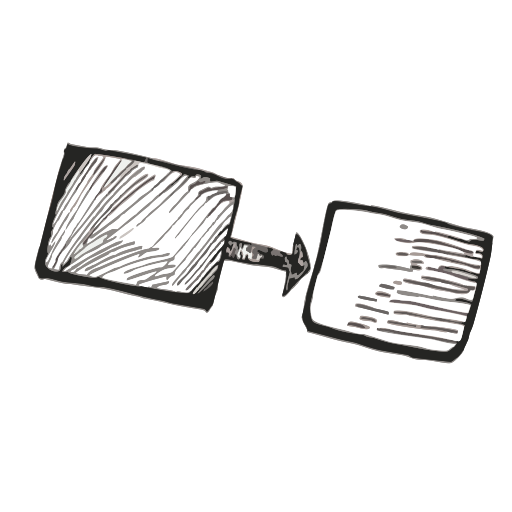
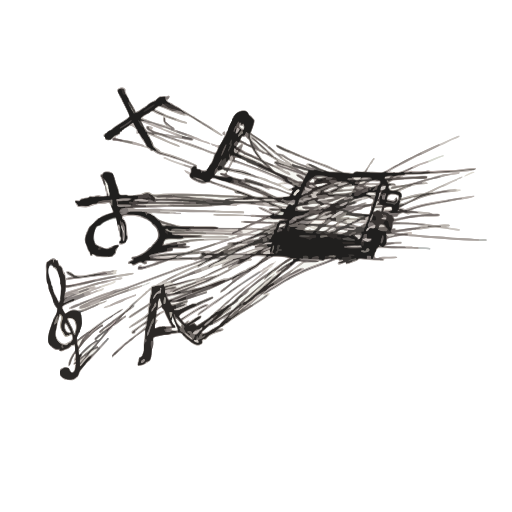
Image of Sequence

Image of Sequence

Language

If that were possible, the ways to use the machine would expand dramatically. In abstract terms, programming is the method by which we make a machine perform certain actions. And the act of programming is done using a programming language.

A programming language is a means of writing instructions that tell a machine what actions to perform.

What Language Does a Machine Understand?

What Language Does a Machine Understand?

Where and How Is It Used?

  So, when and where can we use the language for writing instructions? In Japan, people primarily communicate in Japanese — but what about programming languages?

Programming languages must be written in a form and place where machines can read them. They need to be expressed in a way that a computer can understand.

What Machines Can Understand

So what kind of form can a machine read? Since machines operate using electricity, signals are expressed through electrical states.

What does it mean to treat electricity as a signal? Think back to what we said earlier about turning on the power.

That means we can represent two states: ON and OFF. Let’s assign 1 to the “ON” state and 0 to the “OFF” state, and imagine we can store many such signals.

Then, you could create something like 1110001010100…. In other words, you can represent information numerically using what we call “binary.”

Representing Information Through 0 and 1 – Light On and Off

Representing Information Through 0 and 1 – Light On and Off

Repetition and Combination

In this way, electrical signals can be processed using basic arithmetic operations and then combined to define letters and symbols. This data is stored in memory and can be read back, allowing more complex information to be expressed.

Through this process, machines finally become able to represent symbols and characters that humans can understand. By repeating and combining what has already been made possible, new forms of expression emerge.

← Back to all courses Back to top ↑